Thursday, 22 October 2015

Tuesday, 20 October 2015
Film Exhibition
Film Exhibition; Theatrical
1) Exhibition is the retail branch of the film industry. Exhibition includes a films public screening, paying for customers in a site devoted to such screenings and the movie theatre.
2) It is the aim of the exhibitor to sell the experience of the film and concessions. Exhibitor's to some extent control how films are programmed, promoted and presented to the public. They hold considerable influence over the box-office and reception of films.
2) It is the aim of the exhibitor to sell the experience of the film and concessions. Exhibitor's to some extent control how films are programmed, promoted and presented to the public. They hold considerable influence over the box-office and reception of films.
Film Exhibition; Others

1) Cinema, TV, DVD & Online
- The shift to home viewing on portable devices has been the most significant development in non-theatrical film distribution. The introduction of new technologies such as satellite and cable television, videocassettes, DVDs and the Internet have helped to revolutionise this area.
- Home Exhibition has been a viable option for exhibitor's since the 1920s after the introduction of portable 16mm equipment.
- It was not the late 80's that the home became the major site for film exhibition, this trend was reinforced by the introduction of digital cinema and the Internet.
- The shift to home viewing on portable devices has been the most significant development in non-theatrical film distribution. The introduction of new technologies such as satellite and cable television, videocassettes, DVDs and the Internet have helped to revolutionise this area.
- Home Exhibition has been a viable option for exhibitor's since the 1920s after the introduction of portable 16mm equipment.
- It was not the late 80's that the home became the major site for film exhibition, this trend was reinforced by the introduction of digital cinema and the Internet.
The Early Days;
1) During the early years films were all silent and were usually shown with a live musical accompaniment.
2) Audiences could be quite noisy often reading the 'inter-titles' out loud.
3) 1927 heralded the arrival of fully synchronised sound.
4) By the 1930s 1/2 the population of Britain went to the cinema at least once a week.
5) 'B' pictures would run alongside the main film.
6) By 1939 there was 5500 cinemas in Britain.
7) 1946 cinema attendance in Britain was the highest ever.
2) Audiences could be quite noisy often reading the 'inter-titles' out loud.
3) 1927 heralded the arrival of fully synchronised sound.
4) By the 1930s 1/2 the population of Britain went to the cinema at least once a week.
5) 'B' pictures would run alongside the main film.
6) By 1939 there was 5500 cinemas in Britain.
7) 1946 cinema attendance in Britain was the highest ever.
 Television;
1) Only 15,000 Television sets in Britain in 1945.
2) By 1955 there were 5 million due to the introduction of commercial Television.
3) By 1961 11 million sets, cinema admission's had fallen by 75%.
2) By 1955 there were 5 million due to the introduction of commercial Television.
3) By 1961 11 million sets, cinema admission's had fallen by 75%.
Post war poverty;
1) Entertainment tax, prices went up, cinema numbers fell.
2) Money channelled into house-building, virtually no money left for cinema.
3) Slum clearances & rebuilding programmes reduced audience numbers.
4) 1947-48 US distributors boycotted Britain due to proposed import duties.
5) Cinema audiences never recovered.
2) Money channelled into house-building, virtually no money left for cinema.
3) Slum clearances & rebuilding programmes reduced audience numbers.
4) 1947-48 US distributors boycotted Britain due to proposed import duties.
5) Cinema audiences never recovered.
The 1980's;
1) Video hire in the 80s was a further blow, 1985 there were less than 1000 cinemas in Britain.
2) Rise of the 'multiplex' cinema in 1985;
- Out of town sites with easy access, huge choice of films with 8-12 screens.
3) Improvements in technology- Dolby surround sound, digital film, 3D.
- Higher proves justified by a better experience
- Better experience in relation to new forms of exhibition; computers, tablets, phones etc.
2) Rise of the 'multiplex' cinema in 1985;
- Out of town sites with easy access, huge choice of films with 8-12 screens.
3) Improvements in technology- Dolby surround sound, digital film, 3D.
- Higher proves justified by a better experience
- Better experience in relation to new forms of exhibition; computers, tablets, phones etc.

Monday, 19 October 2015

10 Key Steps in our Narrative
The 10 key scenes within our Film;
1) The family move into a new house and begin unpacking and making themselves at home.
2) Summer discovers the book in the basement of the new house when she is storing away empty removal boxes.
3) Summer opens the book and reads a line from the first page, the demon has unknowingly been released and appears behind her, then disappears at the sound of voices.
4) Once released the Demon hunts down and gruesomely murders professor Culkin. Body covered in what appear knife marks and strange writing.
5) Summer comes into school the next day and discovers her teacher has been killed, sees the photos of the body, a blood stained appears in her bag. Demonic text telling her to 'admit it' appear in her school books.
6) Summers behaviour seems suspicious thereafter and her friends begin to wonder if she has had something to do with it. Later that night the demon uses Summers night terrors to haunt her.
7) At home she finds the book and is scared by it, she tries to get rid of it but it appears mystically later on that night. She wakes up with 'admit it' 'you did it' carved into her skin.
8) Summer opens up to Freya & Lola about what has been happening and they all agree to find out more about the strange events. They research about the book and discover that it holds a demon and they learn how to destroy the book and the demon.
9) They read through the book, the demons power grows, the hauntings become more and more graphic as the demon plays on their greatest fears. They attempt to overcome the challenges and destroy the book once and for all.
10) The climax of the film, they finish the last page of the book and tackle the demon head on in a battle to destroy both it and the book. The demon unleashes its full powers and unleashes nightmarish dreams on the trio, transports each of them into a nightmare that they have to escape from. The film ends with Summer succumbing to the demons wishes, 'admitting' to the murder and being sent to prison having failed to destroy the book and the demon. Summer (now the demon) breaks out of prison and hunts down and kills Freya and Lola.
Which scenes will be used in our trailer?
Within our trailer we will be using key scenes; 1,2,3,4,8 & 10
We chose to use these scenes because we felt that they included the main action scenes and took the narrative in the right direction. These clips will capture the audiences attention and hopefully bring our trailer to life.
1) The family move into a new house and begin unpacking and making themselves at home.
2) Summer discovers the book in the basement of the new house when she is storing away empty removal boxes.
3) Summer opens the book and reads a line from the first page, the demon has unknowingly been released and appears behind her, then disappears at the sound of voices.
4) Once released the Demon hunts down and gruesomely murders professor Culkin. Body covered in what appear knife marks and strange writing.
5) Summer comes into school the next day and discovers her teacher has been killed, sees the photos of the body, a blood stained appears in her bag. Demonic text telling her to 'admit it' appear in her school books.
6) Summers behaviour seems suspicious thereafter and her friends begin to wonder if she has had something to do with it. Later that night the demon uses Summers night terrors to haunt her.
7) At home she finds the book and is scared by it, she tries to get rid of it but it appears mystically later on that night. She wakes up with 'admit it' 'you did it' carved into her skin.
8) Summer opens up to Freya & Lola about what has been happening and they all agree to find out more about the strange events. They research about the book and discover that it holds a demon and they learn how to destroy the book and the demon.
9) They read through the book, the demons power grows, the hauntings become more and more graphic as the demon plays on their greatest fears. They attempt to overcome the challenges and destroy the book once and for all.
10) The climax of the film, they finish the last page of the book and tackle the demon head on in a battle to destroy both it and the book. The demon unleashes its full powers and unleashes nightmarish dreams on the trio, transports each of them into a nightmare that they have to escape from. The film ends with Summer succumbing to the demons wishes, 'admitting' to the murder and being sent to prison having failed to destroy the book and the demon. Summer (now the demon) breaks out of prison and hunts down and kills Freya and Lola.
Which scenes will be used in our trailer?
Within our trailer we will be using key scenes; 1,2,3,4,8 & 10
We chose to use these scenes because we felt that they included the main action scenes and took the narrative in the right direction. These clips will capture the audiences attention and hopefully bring our trailer to life.
Monday, 12 October 2015
The Role and Purpose of Film Distribution
The Role and
Purpose of Film Distribution
Film
distribution is the process of making a movie available for viewing for an
audience. The task usually falls to a professional film distributor who
determines the marketing strategy for the film, the media platforms it will be
exhibited on and when the release date is etc. The film can be exhibited directly
to the public through cinema, television or home viewing including DVD &
Blu-Ray, download and social media.
 A film
distributor is responsible for the marketing of a film. The distributor sets
the releases dates and the method by which a film is to be exhibited or made
available for viewing. Distribution deals are one of the most important parts
of financing a film because without them the film cannot be shown to the
audience or put out on DVD etc.
A film
distributor is responsible for the marketing of a film. The distributor sets
the releases dates and the method by which a film is to be exhibited or made
available for viewing. Distribution deals are one of the most important parts
of financing a film because without them the film cannot be shown to the
audience or put out on DVD etc.
The role of
a film distributor is to ensure that as many people as possible go and see a
film and make sure that the film is well known internationally whilst also
providing audiences with access to the film. Every film has its own
distribution plan to ensure that the film is able to reach its target market.
The typical
release routine for a film is regulated by business models called “release
windows” this keeps different instances of a movie from competing with the
other. Allowing the films to take advantage of different markets at different
times. A movie is first released through cinemas (theatrical window), then,
after approximately 16 and a half weeks it is released to Blu-Ray and DVD
(entering its video window). After an additional number of months it is released
to Pay TV and VOD services and approximately two years after its theatrical
release date, it is made available for free-to-air TV.
Stages of
Film Production/Distribution;
1)
Producers, directors & screenwriters begin
planning the production.
2)
Production finances and crew are finalised &
the production of the film can begin.
3)
Filming starts in studios or on location, once
all the footage has been shot the editing stage can begin.
4)
Once production of the film has been finished,
distributors can begin work on the film’s release strategy.
5)
The distributors will then secure the screening
of the films within cinemas.
6)
The distributor then creates a buzz surrounding
the film’s release.
7)
The film along with the disk & classification
is delivered to the cinema a few days before the film’s release.
8)
The film then runs for the agreed number of
weeks, it may be extended if the film is in high demand.
Film works
are intellectual properties & belong to the people/organisations that fund
them. Intellectual properties ensure that the film’s creators receive a fair
return for their investment. The film’s creators are then able to license the
distributors to bring the film to the market.

Sunday, 11 October 2015
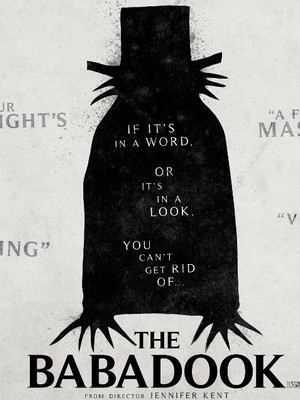
The Babadook
Media Language/Mise en Scene;
§
Dark & sinister music combined with a
lighter tone at the beginning of the trailer juxtaposes the ominous nature of
the horror genre alongside the happiness symbolised by the equilibrium.
§
Use of a darker filter helps to create the
disturbing and disconcerting atmosphere which we usually associate with the
horror genre.
§
The mysterious discovery of the book makes the
audience doubt themselves andputs them on edge as we wonder how it actually
appeared.
§
The ‘monster under the bed’ classic horror film
idea helps to identify with horror fans and reintroduce ‘old school horror’
§
The connotations of purity and innocence
associated with the child create sympathy with audience, relates to common
experiences all children have- being afraid of monsters.
§
The child in the trailer is a countertype to
this representation however as he is shown to be creating his own weapons to
fight the Babadook, contrasting the stereotypical view of children with this
darker nature.
§
Lots of shots involve lots of zooming to focus
the audience's attention and to add continuity
§
Constant flashing back to the book creates
tension and continuity- juxtaposes the original connotations of a bedtime story
(happiness, safety, relaxation) with the horrific events that follow.
§
The Darkness in the trailer creates a fear of
the unknown- the 'Babadook' is never seen, but the door movement’s let the
audience know it is there.
§
Policeman- symbolises protection and safety on a
human level.
§
The “knock-knock-knock” to symbolise the
presence of the Babadook, lets us know something bad is going to happen.
§
Cockroaches’ coming out of crack in wall,
associated with the dead, fits in with the codes and conventions of the horror
genre.
§
Grieving- the theme of death is prominent
throughout the trailer due to the death of the father, helps to drive home the
horrific effects of the horror genre.
§
Old lady "he sees things as they are"-
the elderly are stereo-typically wise, in horror films they are often used as a
narrative tool to push the plot forward- here she is promoting the idea that
the Babadook is real and that the child is more knowledgeable than the adults.
§
The appearance of black clouds over the house
reinforces the suspense and tension as we know something bad is going to
happen.
Narrative;
o
The narrative is based around a widow whose
husband died on the same day her son was born; she struggles to maintain a
strong relationship with her child and feels she is not doing her job as a mum
properly.
o
Her son begins to have dreams about a monster
who plans to kill them both, he constructs weapons to defend himself against it
and his fragile mother.
o
The trailer begins with the child discovering a
book called “Mr Babadook”, strange occurrences begin to happen and the story
begins.
Institution;
·
Produced by Entertainment One, Screen Australia
and Causeway Films.
·
Alongside; South Australian Film Corporation and
Smoking Gun Productions.
·
Written and directed by Jennifer Kent.
·
Distributed by Cinetic Movies, eOne Films
International and IFC Films.
Genre;
 The trailer has elements of more than 1 genre;
1)
Horror- dark, sinister location, the hauntings,
the melancholic musical accompaniment and the murkier and shocking scenes shown
in the trailer. Appeals to fans of traditional horror as it delivers the
tension and terror they crave.
2)
Mystery- The mother must figure out the true character
of the Babadook and find out whether or not it truly exists or is just a
figment of her imagination. This would intrigue the audience as they would also
want to find out what the Babadook looks like etc.
3)
Action- The crafting of weapons, fight scenes;
the mother hunting down her child, the battles with the Babadook. Action appeals to all target audiences as it
keeps them entertained and adds to the drama and tension.
Representation;
1)
Women- seen as fragile, weak and the victim
(mother is possessed by the Babadook) Towards the end shown as violent and crazed
when the mother is possessed and hunts down her son, however she is shown to be
courageous when she finally confronts the Babadook.
2)
Males- shown as wealthy, smart and professional-
doctor, school psychiatrist and co-worker, know what they are doing. However
they are shown as ignorant as they do not know about the Babadook and do not
believe in ‘spooks’
3)
Children- shown as misunderstood, also as the
victim- the child is clearly also weak and vulnerable- however he builds
weapons to fight the Babadook which is breaking the stereotype usually
associated with children. Overall shown in the traditional way.
Ideologies/Media Values;
v
During the trailer the mother is shown as the
protector (cradling her son, reading him stories, caring about his education)
which breaks the traditional stereotype of a nuclear family, she is having to
manage without her husband and take over the roles traditionally associated with
the male sex. However her failure to defend herself against the Babadook hails
her as more of a failed protector.
v
The child is represented very negatively- he has
'significant behavioural problems', has nightmares and is seen to be destroying
both his mother’s sanity and her happiness. He is shown as weak and ‘clingy’ to
his mother throughout the trailer and is portrayed as having to rely on others
to get by.
v
The elderly are shown as knowledgeable, wise,
kind and caring, the old woman in the trailer is portrayed as kind and innocent
as she offers her help to the family and looks after the child for the mother.
Audience;
§
Primarily for people over 18, the dark theme and
the horror shown in the trailer are targeting a more mature audience and true
fans of the horror genre.
§
Suitable for any group in society other than
children as they should not be exposed to scenes that are shown within the
trailer.

Tuesday, 6 October 2015
Film Pitch
This is our film pitch for Lacerate. In it we describe the main characters, plot, budget and narrative of our film as well as other key topics. We both felt that the PowerPoint went well and was a success however there were some improvements that could be made, such as; I could have been cooler under pressure and not moved around so much as this made the pitch look unprofessional. As well as this we had to do a few retakes as we often forgot out lines mid scene and had to shoot again from scratch. One final improvement would have been to keep to the steps that I previously posted on blog as we did not follow these and ended up having to read our lines off sheets of paper.
Subscribe to:
Comments (Atom)